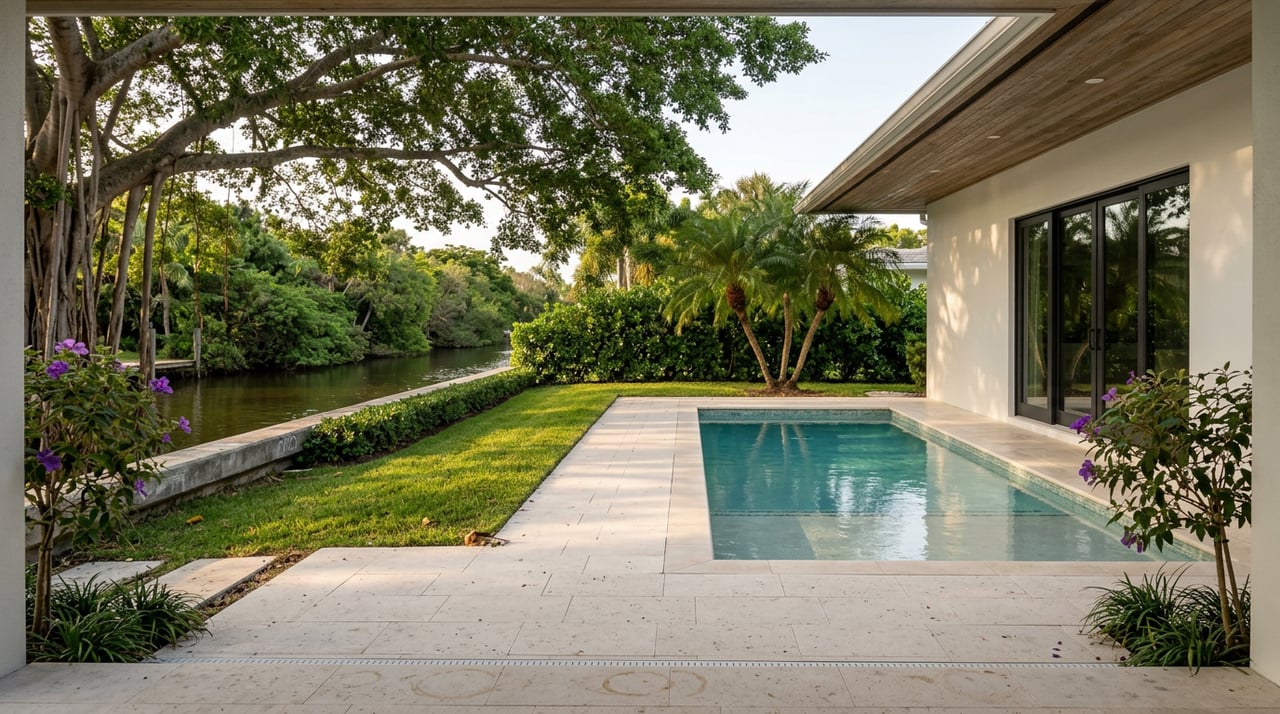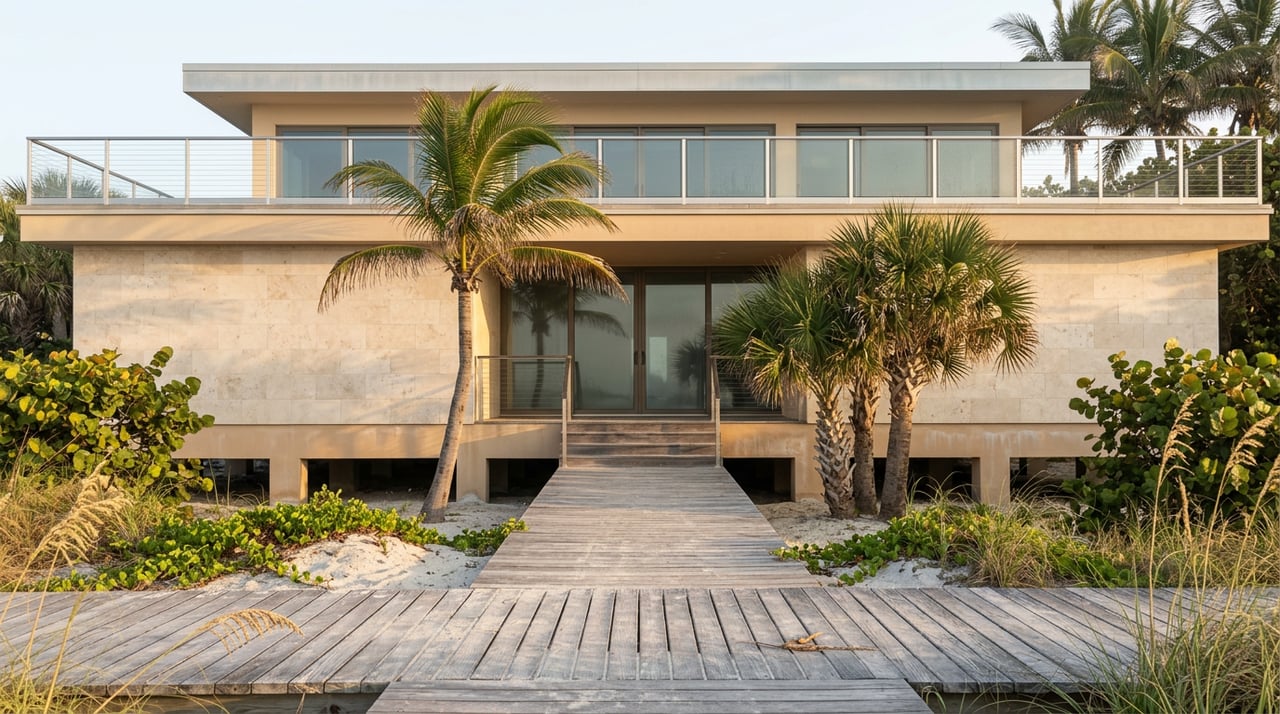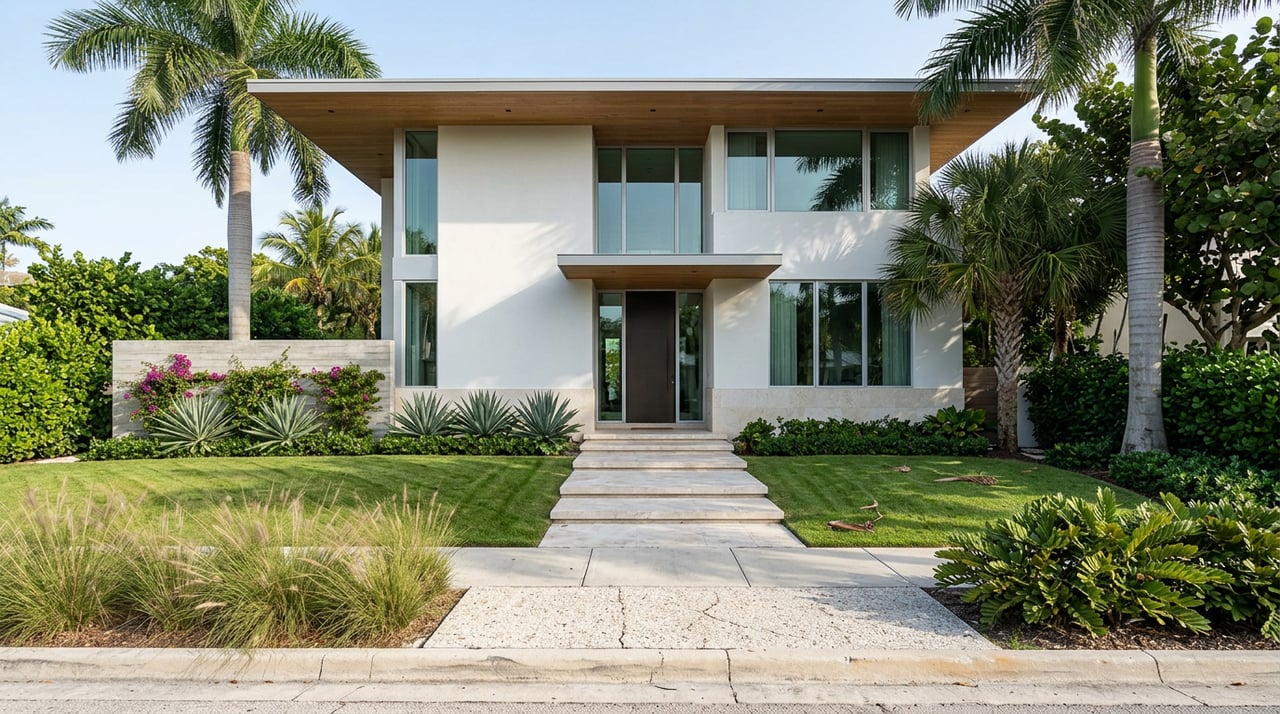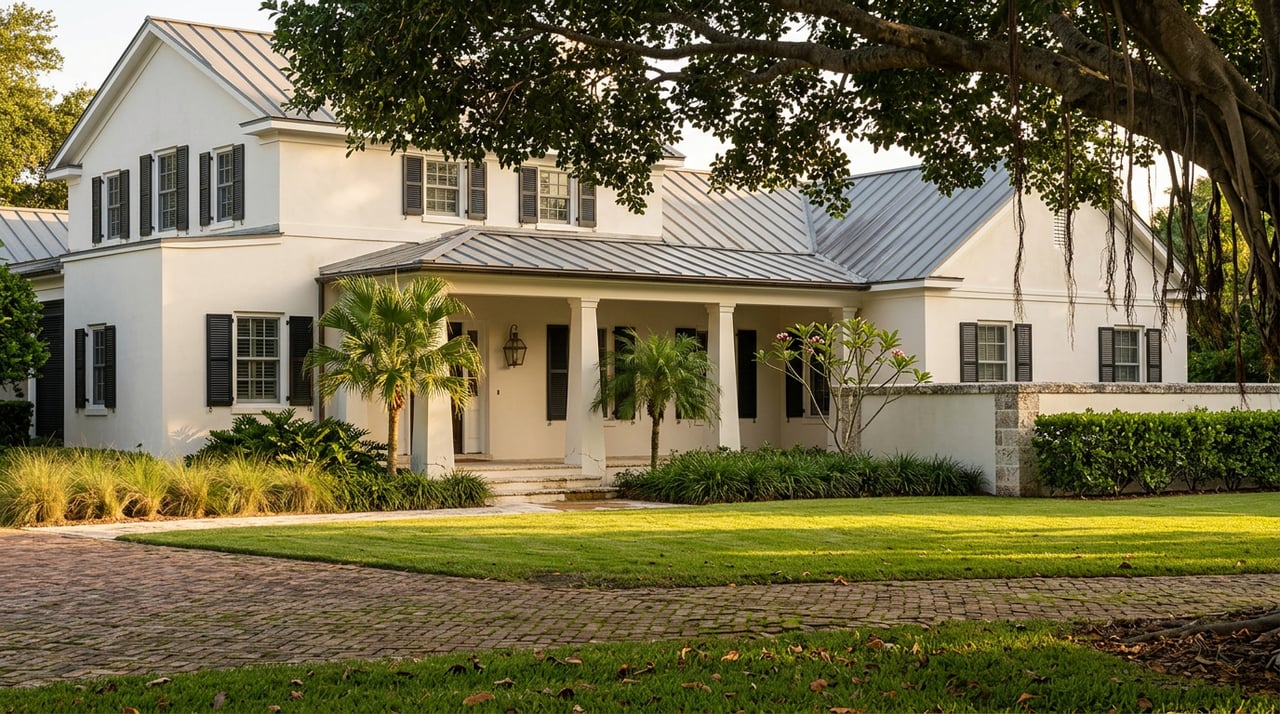
Two houses on the same Port Royal street, similar size, similar price, similar dock. One of them carries the right to eventually walk onto the beach at the Port Royal Club as a member. The other does not, and never will, regardless of who buys it or how much they offer. The difference has nothing to do with the house. It has to do with a line drawn through the neighborhood decades ago and a 90-day clock that starts the moment a deed records.
Most buyers moving toward a Port Royal closing assume the Club is a lifestyle perk they can sort out later, the way you might decide on a golf membership after you've settled in. It isn't. Eligibility is a legal right attached to the parcel itself, and the window to claim it is short, unforgiving, and easy to miss if nobody on your closing team is watching the calendar.
A Right That Travels With the Land, Not the Owner
The Port Royal Club's own membership materials spell out the mechanism plainly: once a Club-eligible property changes hands, the new owner has 90 days to choose one of three paths. Join the Club outright. Pay a partial deposit to hold the eligibility open for a period of years without joining. Or do neither, in which case the property's eligibility lapses.
That third option is the one that catches people off guard. This isn't a fee you can pay late with a penalty. According to the Club's own membership page, letting the window close means the eligibility tied to that specific parcel is gone. A future owner, even one who buys the house years later with every intention of joining, would face a steep reinstatement cost rather than simple enrollment, because the right that transferred at your closing was never reissued.
A missed deadline on one closing doesn't just cost the buyer who missed it. It follows the house.
Where the Line Actually Falls
Not every Port Royal address carries this right in the first place. Eligibility is limited to properties south of Palmer Estates and 21st Avenue South, and the boundary is precise enough that it excludes some Aqualane Shores parcels that sit along 21st Avenue itself, even though those homes are a short walk from ones that qualify.
This means the eligibility question can't be answered by neighborhood name alone. Two buyers comparing homes in the same general area, both being shown as "Port Royal," could be looking at fundamentally different long-term propositions depending on which side of that line each address falls. Anyone under contract should confirm eligibility status against the specific parcel, not the general reputation of the street.
Here are the three choices a new owner of an eligible property actually faces inside that 90-day window:
- Join fully by paying the current initiation fee, which activates full membership immediately.
- Reserve the right by paying a portion of the initiation fee and a portion of annual dues, which keeps the door open without club privileges in the meantime.
- Take no action, which suspends the property's eligibility and requires a separate reinstatement fee before any future owner can join at all.
The gap between paths two and three is where most of the financial damage happens, and it happens quietly, months after closing, when nobody is thinking about a beach club anymore.
What a Lapsed Window Actually Costs
The Club's own terms attach a reinstatement fee to any property whose eligibility has lapsed, layered on top of whatever the standard initiation fee happens to be at the time. That initiation fee is not static either. It rose to $400,000 as of January 1, 2026, up from $315,000 previously, which means a buyer who lets eligibility lapse today is handing a future owner a materially higher bill than the one that would have applied a year ago, before adding the reinstatement charge on top. This is not a soft deadline with a grace period. It functions as a use-it-or-lose-it clause with lasting consequences for resale value.
Recent sales data on Port Royal closings gives some sense of what that eligibility is actually worth in dollar terms. In the two years ending in mid-2026, homes carrying full Club eligibility sold for an average price well above homes with only associate-level eligibility, a gap brokerage data put at roughly $18.9 million versus $8.28 million. Some of that spread reflects location rather than the club right alone, since eligible homes cluster closer to the water and the clubhouse itself, but the pattern holds even when accounting for that overlap: eligibility is priced into these homes as a distinct, valuable feature, not a footnote.
That gap matters more this year than it has in the past decade, because the Club is not the same static amenity it was when the eligibility rules were written.
Why the Timing Matters More Right Now
The original Port Royal Club clubhouse, in place since 1959, was substantially damaged by Hurricane Ian on September 28, 2022. Rather than repair it, members voted for a full rebuild, and on August 21, 2024, the Naples City Council approved the project's conditional-use permit after roughly ten hours of hearings, according to Naples Press. The council's approval came over the objection of Terry Mullen, a neighboring homeowner concerned about noise from the larger facility, a dispute that shaped several of the final conditions attached to the permit.
The new clubhouse, designed by Hart Howerton with a West Indies architectural character and built by Suffolk Construction, was targeted for a late 2026 grand opening at the time of approval, per Gulfshore Business. With today's date in early August 2026, that puts the project in its final months before doors are expected to open, which means anyone weighing eligibility right now is not speculating about some distant future amenity. They are deciding whether to buy into a Club months away from unveiling a rebuilt beachfront pool, new dining venues, and the kind of facility Port Royal hasn't had since before the storm.
The financial side of the rebuild has already tested the membership. The Club, capped at 700 members, assessed each member $45,000 toward the $100 million project on August 1, 2024. That cost prompted 45 members to resign, 85 percent of them over age 70 according to a letter from Club President Nancy Carlson, while 23 people on the associate waitlist stepped in to fill open slots, leaving membership at 622 as of that August. That churn is worth knowing if you're evaluating a Port Royal purchase now, because it shows a Club willing to enforce its financial obligations on existing members just as strictly as its enrollment deadlines on new ones.
What This Means If You're Under Contract
For a buyer moving toward closing on an eligible Port Royal property, the practical steps are straightforward but easy to overlook in the middle of a larger transaction. Confirm the parcel's eligibility status directly with the Club's membership office before closing, not after. Calendar the 90-day deadline the day the deed records, not the day you move in. Decide in advance which of the three paths you intend to take, because 90 days moves quickly once furniture is being delivered and cable is being installed.
None of this is complicated once someone flags it early. It becomes expensive only when nobody does.
If you're weighing a purchase in Port Royal, whether the appeal is the deep-water access, the acreage, or the Club itself, working with someone who tracks these deadlines as part of the transaction, not as an afterthought, protects the value you're paying for. Sandra Edwards has spent 25 years in Naples working closely with buyers across Port Royal and the neighborhoods around it, and she coordinates directly with membership offices and closing teams so a 90-day window never becomes the reason a client's investment loses value they never meant to give up.
Frequently Asked Questions
Does the 90-day clock start at closing or at some later date? It starts when the deed is recorded, which is typically the closing date itself. There is no separate move-in grace period built into the rule.
Can the 90-day window be extended? The Club's own terms don't describe a standard extension process. Buyers should treat the deadline as fixed and plan accordingly rather than assume flexibility will be available.
If I buy a home whose eligibility already lapsed under a previous owner, can I reinstate it? The Club's terms attach a separate reinstatement fee on top of the standard initiation fee for any lapsed property, which makes it a more expensive path than enrolling within the original 90-day window would have been.
Is every home in Port Royal eligible for the Club? No. Eligibility is limited to properties south of Palmer Estates and 21st Avenue South, and it specifically excludes certain Aqualane Shores parcels along 21st Avenue. Confirming a specific address's status should be part of due diligence on any Port Royal purchase.